Quick answer
Commercial equipment finance funds larger, heavier or installed assets such as commercial kitchens, cool rooms, production machinery, printing presses and plant. The gear usually secures the finance, but because some items are bolted in or specialised, lenders look closely at resale value, installation costs and the supplier. Bigger projects often combine equipment finance with an unsecured or property-secured loan for the parts that can't secure themselves.
Key points
- Covers heavy, installed or high-value assets that go beyond everyday tools
- Installed items lose some resale value, so lenders separate the gear from the installation
- Progress payments and deposits to suppliers need planning before you order
- Large packages often combine equipment finance with a business loan
- Examples
- Kitchens, cool rooms, CNC, presses, plant
- Watch for
- Install costs, progress payments, lead times
- Often paired with
- Unsecured or property-secured loan
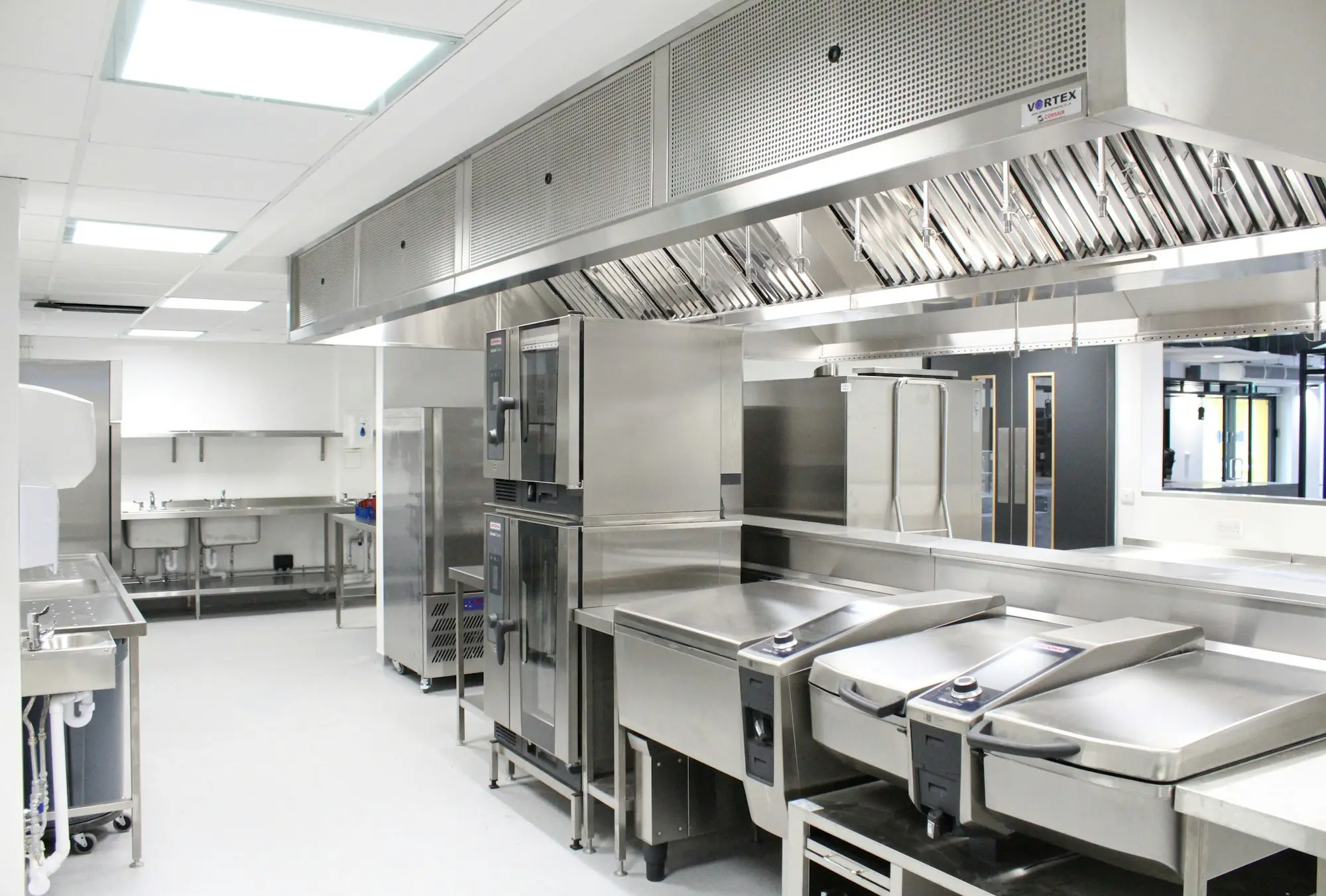
A laptop or a set of power tools is one thing. A walk-in cool room, a six-burner range with a matching combi, a production line or a commercial printing press is another. These are the purchases that change what a small business can do — more covers, bigger runs, new contracts — and they come with price tags that would empty most bank accounts. Commercial equipment finance is built for them.
How is commercial equipment different from everyday equipment?
Three things set it apart, and each affects how a lender looks at your application.
It’s often installed. A cool room is built into the premises. A commercial exhaust canopy is ducted through the ceiling. Once installed, some of the value sits in the installation rather than the item, and that part can’t be recovered if the gear is ever removed.
It’s often specialised. A machine built for one type of production may have a small resale market. Lenders weigh how easily they could sell it if needed.
It’s often ordered in advance. Suppliers may want deposits or progress payments weeks or months before delivery, which doesn’t always line up with when finance is released.
None of this rules the equipment out. It just means the paperwork needs to be clearer and the structure a little more considered than for a standard purchase. The basics of business equipment finance still apply.
What kinds of businesses use it?
- Restaurants, cafés and caterers fitting out a commercial kitchen
- Bakeries and food producers adding ovens, mixers, provers and packaging lines
- Manufacturers and fabricators buying CNC machines, presses, folders and welders
- Printers and sign makers upgrading wide-format printers and finishing equipment
- Clinics and studios installing imaging or treatment equipment
- Butchers, delis and grocers putting in cool rooms and refrigerated display
For hospitality in particular, see our page on hospitality business loans, which covers how equipment fits with the rest of a venue’s funding.
How do lenders assess big equipment purchases?
Expect them to look at the asset and the business together.
| What they look at | Why it matters |
|---|---|
| Itemised supplier quote | Separates equipment from installation and works |
| Supplier’s track record | Confirms the gear will actually be delivered |
| Age and condition (if used) | Drives resale value and the term offered |
| Your bank statements and financials | Shows the business can carry repayments |
| How the equipment earns revenue | New capacity, contracts, efficiencies |
| Any deposit or trade-in | Reduces the amount at risk |
For larger amounts, lenders may also want a brief explanation of the project, especially if the equipment opens up a new line of work. A paragraph is usually enough.
Splitting the package: what equipment finance covers and what it doesn’t
The neatest structure for a large purchase often uses two facilities:
- Equipment finance for the identifiable assets — the oven, the press, the refrigeration units.
- A business loan for everything around them — electrical upgrades, plumbing, ducting, building works, approvals and commissioning.
The second part can be an unsecured business loan if the business is trading well, or a property-secured loan if you own property and the amount is larger. Getting your supplier and tradespeople to quote these parts separately makes the split straightforward.
If you’d like a second pair of eyes on how to structure your package, send us the outline — a specialist will suggest the cleanest split, and there’s no credit check to enquire.
Planning around deposits and lead times
Big equipment rarely arrives the day you order it. A few ways to keep the timing under control:
- Ask the supplier for a payment schedule in writing — deposit, progress payment, balance on delivery.
- Check when finance can be drawn. Some lenders pay only on delivery and installation; others can fund progress payments.
- Keep a buffer for currency movements on imported gear and for installation surprises.
- Don’t pay the full balance yourself expecting to be reimbursed. Refinancing equipment you’ve already paid for in full can be harder than financing it upfront.
Illustrative example: A small bakery orders a new deck oven and spiral mixer from an importer that wants 30% upfront and the balance on arrival in twelve weeks. The owner pays the deposit from cash reserves, and equipment finance pays the 70% balance directly to the importer on delivery. Separately, a modest unsecured loan covers the three-phase power upgrade the oven needs.
Tax and depreciation basics
Most commercial equipment will cost more than the ATO’s $20,000 instant asset write-off threshold, so for small businesses using simplified depreciation it typically goes into the small business pool. The ATO describes a 15% deduction in the first year and 30% each year after for pooled assets. GST-registered businesses can generally claim the GST on the purchase with a valid tax invoice. The way your finance is structured can affect these claims, so run the plan past your accountant before you order.
Questions to ask before you commit
- Will the equipment fit the space, the power supply and the gas or water connections you have?
- Does the landlord need to approve installation, and what happens to the equipment at the end of the lease?
- What warranty and service support does the supplier offer?
- How will the equipment pay for itself — and how long before it does?
Our guide on getting a finance-ready equipment quote has a checklist you can send your supplier.
Talk through your equipment package
Big gear deserves a proper plan, not a rushed form with a dozen lenders on the other end. Tell us what you’re buying, the supplier, the rough cost and your timing. A real person will map out how to fund the equipment and the work around it. Enquiring involves no credit check, your enquiry isn’t sprayed around the market, and the more precise your answers, the faster we can land on the right option. Get your commercial equipment options.
Frequently asked questions
Can installation costs be included in commercial equipment finance?
Sometimes. Some lenders will include reasonable delivery and installation if it's on the supplier's invoice. Building works, electrical upgrades and plumbing are usually treated separately and funded another way.
What if my supplier needs a deposit months before delivery?
Tell us early. Some lenders can fund progress payments; otherwise a short-term facility or your own funds may cover the deposit, with equipment finance paying the balance on delivery.
Is imported equipment harder to finance?
It can be, mainly because of delivery timing, currency movements and confirming the supplier. A local agent's invoice, clear specifications and a delivery schedule make it much easier.
How long can commercial equipment be financed for?
Terms are usually linked to the useful life of the asset. Durable plant may suit a longer term than technology that will be outdated in a few years. We'll match the term to the item.